
The EU Pay Transparency Directive requires Member States to transpose the Directive into national law by June 2026. Large employers — those with 100 or more employees — will face the most immediate obligations, including pay band disclosure for new hires, obligations to provide existing employees with information on average pay levels, and structured joint pay assessments where significant gender pay gaps exist and cannot be justified.
Talenbrium's readiness assessment across 15 EU Member States — drawing on our employer tracking database, primary survey data, and regulatory monitoring — finds that only 34% of large employers have the job evaluation frameworks, pay data infrastructure, and reporting capabilities required for compliance. That figure drops to 22% when assessed against the full scope of obligations rather than the minimum disclosure requirements.
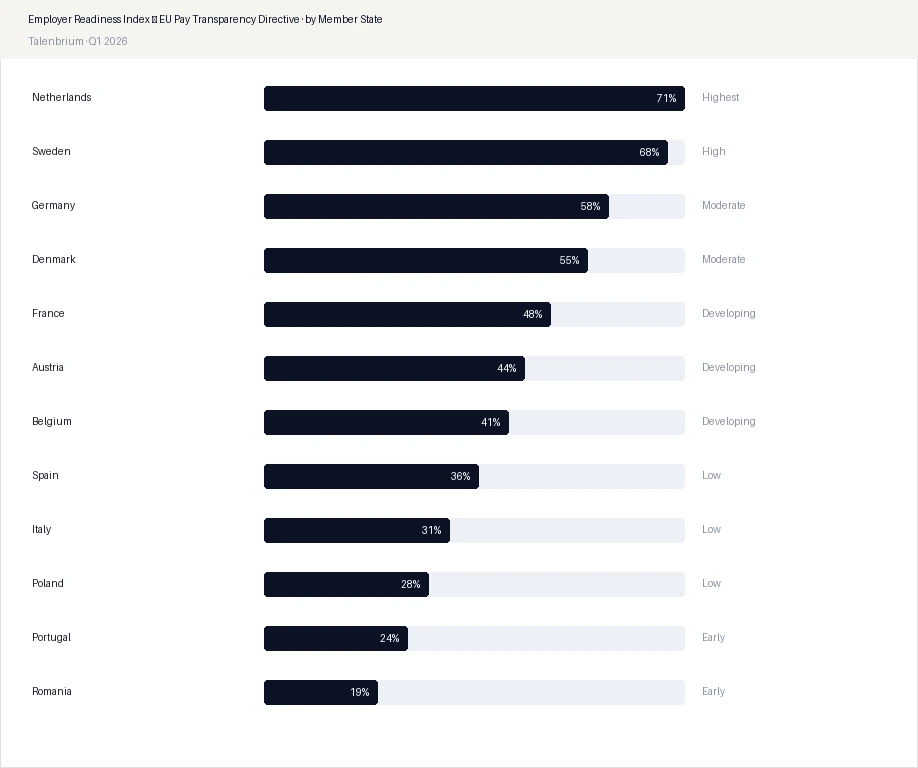
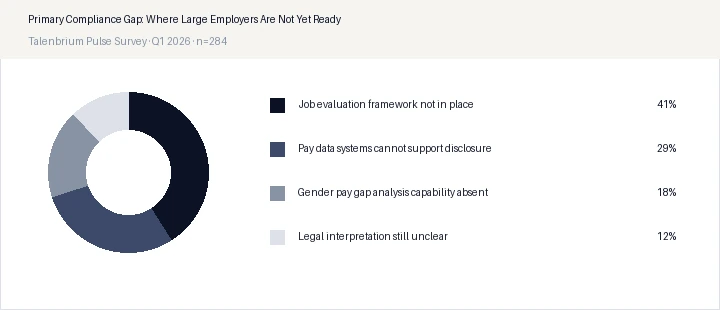
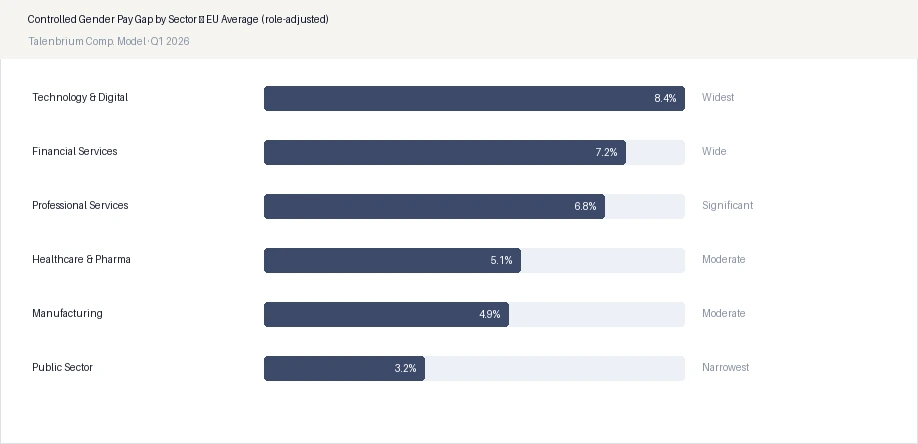
The compliance gap is not primarily about awareness — 89% of surveyed HR leaders are aware of the Directive's requirements. The gap is structural: most large organisations have neither the job architecture rigour nor the pay data infrastructure to meet the Directive's obligations. Three specific requirements are generating the most preparedness anxiety: formal job evaluation frameworks that allow transparent pay band assignment; systems capable of providing pay information to individuals on request; and the capacity to conduct and publish the gender pay gap assessment required where gaps exceed 5%.

Customise the study to your target geography, role, skill cluster, or benchmark set, or request a sample before you proceed.