
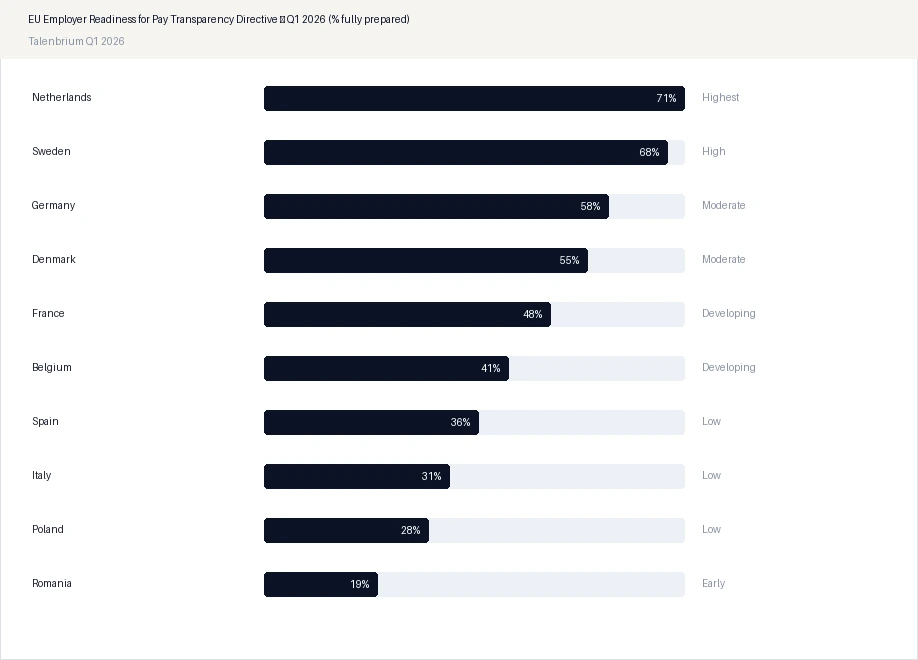
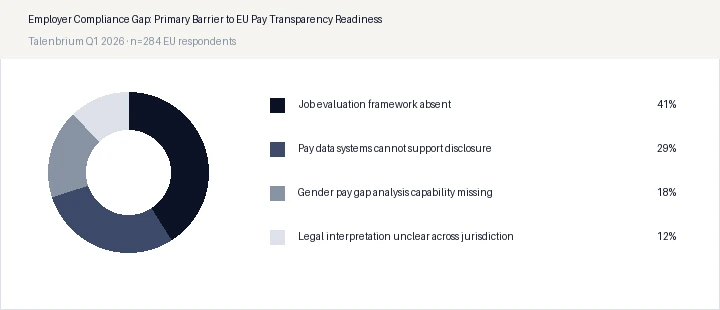
The European Union's Pay Transparency Directive (Directive 2023/970) crossed its most critical threshold in 2026: EU member states faced a binding implementation deadline of 7 June 2026, creating a compliance obligation touching an estimated 2.4 million employers across the bloc. Talenbrium's Q1 2026 Workforce Pulse Survey (n=284 HR professionals) found that pay equity and pay transparency readiness ranked as the second-highest compliance concern among European respondents — cited by 61% as a top-three workforce priority for 2026, up from 44% in Q1 2025.
Employers with 150 or more employees face mandatory gender pay gap reporting on 2026 pay data, due June 2027. The data being recorded now will form the basis of the first public disclosures. The urgency is not abstract.
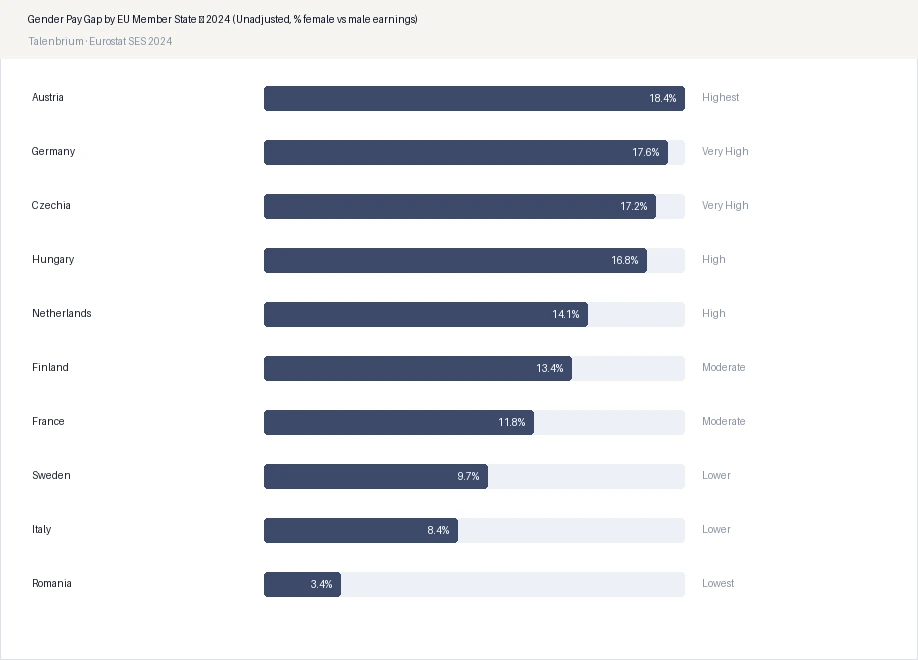
Talenbrium's analysis of EU compensation data, validated against Eurostat's Structure of Earnings Survey, identifies Austria (18.4%) and Germany (17.6%) as facing the highest remediation burden under the Directive, while Luxembourg (0.7%) and Romania (3.4%) present minimal structural gaps. Financial services is the sector with the widest gender pay gap across major EU economies — ranging from 28% in Germany's banking sector to 19% in France's insurance sector.

Customise the study to your target geography, role, skill cluster, or benchmark set, or request a sample before you proceed.